

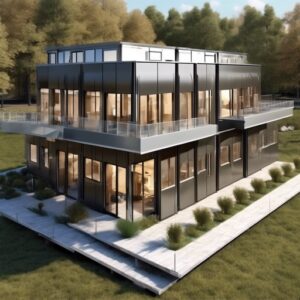
In the evolving landscape of commercial construction, prefabricated buildings have emerged as a compelling option for businesses looking to streamline operations and enhance efficiency. Prefabricated commercial buildings, often referred to as modular constructions, offer numerous advantages over traditional building methods. This article explores why businesses should consider embracing prefabricated solutions, detailing their benefits and showcasing why they are a smart choice for forward-thinking enterprises.
Speed and Efficiency
Prefabricated commercial buildings are constructed off-site in a controlled factory environment. This controlled setting allows for concurrent processes such as site preparation and foundation work to proceed simultaneously with the building manufacturing process. As a result, construction timelines are significantly reduced compared to traditional methods. Businesses can expect faster occupancy and quicker return on investment, which is crucial in today’s fast-paced market.
Cost-Effectiveness
One of the most compelling reasons businesses opt for prefabricated commercial buildings is their cost-effectiveness. The controlled manufacturing environment reduces material waste, and economies of scale in production often lead to lower overall construction costs. Moreover, the predictable construction timeline helps in better budget management, minimizing the risk of cost overruns commonly associated with on-site construction delays.
Design Flexibility
Contrary to common misconceptions, prefabricated buildings offer extensive design flexibility. Modern modular construction techniques allow businesses to customize their commercial spaces to meet specific needs and aesthetic preferences. Whether it’s an office building, retail space, healthcare facility, or educational institution, prefabricated buildings can be tailored to accommodate diverse architectural styles and functional requirements.
Quality and Consistency
Prefabricated buildings are manufactured under strict quality control measures in factory settings. This controlled environment ensures that each component of the building meets rigorous standards and specifications. Additionally, the use of advanced manufacturing technologies and precision engineering results in superior craftsmanship and consistency across all units. Businesses can therefore expect high-quality structures that are built to last, with reduced maintenance requirements over the long term.
Sustainability and Environmental Benefits
Environmental sustainability is increasingly becoming a priority for businesses across industries. Prefabricated buildings offer several environmental benefits compared to traditional construction methods. The controlled manufacturing process minimizes construction waste and optimizes material usage. Moreover, modular buildings are often designed with energy-efficient features such as enhanced insulation, sustainable building materials, and options for renewable energy integration. These green building practices not only reduce the environmental footprint but also contribute to achieving sustainability goals.
Scalability and Adaptability
Business needs can evolve rapidly, requiring flexibility in space utilization. Prefabricated commercial buildings are inherently scalable and adaptable. They can be easily expanded, relocated, or repurposed to accommodate changing requirements without significant disruption to ongoing operations. This scalability makes modular buildings an ideal choice for businesses experiencing growth or those looking to establish a temporary or permanent presence in new locations.
Enhanced Construction Safety
Safety is paramount in any construction project. Prefabricated buildings offer enhanced safety benefits compared to traditional on-site construction. By minimizing on-site activities and exposure to hazardous conditions, modular construction reduces the risk of accidents and injuries. Factory-controlled environments also ensure compliance with strict safety regulations and standards, providing peace of mind to businesses and their stakeholders.
Conclusion
In conclusion, prefabricated commercial buildings represent a paradigm shift in the construction industry, offering numerous advantages that align with the needs and priorities of modern businesses. From accelerated construction timelines and cost savings to design flexibility, sustainability, and enhanced safety, modular buildings provide a compelling alternative to traditional construction methods. As businesses continue to seek innovative solutions to optimize efficiency and adaptability, prefabricated buildings stand out as a versatile and future-ready option. Embracing modular construction not only meets immediate space requirements but also positions businesses strategically for long-term success in a dynamic and competitive marketplace.