

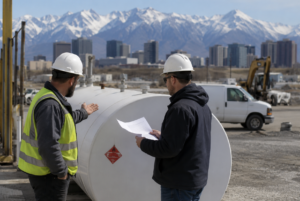
For many companies in Salt Lake City, growth does not happen by accident. It comes from planning ahead, watching local development trends, managing costs, and making smart decisions before a project gets too far down the road. Whether a business is preparing for construction work, equipment expansion, transportation needs, backup power, or industrial operations, fuel storage is becoming a bigger part of the conversation.
Salt Lake City continues to be one of the most active business hubs in the Mountain West. With ongoing construction, commercial expansion, infrastructure needs, and a strong local economy, businesses are looking more carefully at the systems that keep their projects moving. One of those systems is fuel storage. It may not always be the first thing owners think about, but when fuel access becomes a problem, everything else can slow down fast. 🛢️
That is why more companies are taking a closer look at fuel tanks before their next major project begins. A reliable fuel tank setup can help businesses reduce downtime, improve planning, support jobsite efficiency, and avoid costly interruptions. For businesses looking for dependable options, Fuel Tanks Salt Lake City is becoming an important search for companies that want to be prepared before demand increases.
Salt Lake City Business Growth Is Changing How Companies Plan
Salt Lake City has long been known as a regional center for commerce, transportation, construction, technology, and energy-related activity. According to Wikipedia’s overview of Salt Lake City, the city has grown into an important economic and cultural center in Utah and the surrounding region. That growth creates opportunities, but it also creates pressure on local businesses to manage resources more efficiently.
When more development is happening, businesses must think beyond the basics. A construction company may need fuel for heavy equipment. A transportation company may need on-site storage for fleet operations. A commercial property owner may need emergency fuel capacity for backup generators. A contractor may need dependable fuel access in areas where deliveries can be delayed or schedules are tight.
This is where fuel tanks become more than just storage containers. They become part of a company’s operational strategy. If the project depends on machinery, vehicles, generators, or temporary power, fuel planning should happen early. Waiting until the project is already underway can lead to delays, rushed decisions, higher costs, and unnecessary stress.
Local business owners who follow resources like Utah Business understand that staying competitive often means looking ahead. Fuel storage is one of those practical details that may not make headlines every day, but it can have a major impact on project success.
Fuel Access Can Directly Affect Project Timelines
Every business owner knows that delays cost money. In construction, manufacturing, logistics, agriculture, and commercial development, one delay can create a chain reaction. Crews wait. Equipment sits unused. Schedules get pushed back. Clients get frustrated. Costs rise.
Fuel availability plays a direct role in that equation. If equipment cannot run, the project cannot move forward. If trucks cannot be fueled on time, deliveries may fall behind. If backup power is needed and the fuel supply is not ready, a business may face disruption at the worst possible moment.
Reliable fuel tanks help reduce that risk. They allow businesses to keep fuel available where and when it is needed. Instead of relying completely on last-minute deliveries or off-site fueling, businesses can create a more controlled system. This is especially useful for projects with demanding schedules or remote jobsite needs.
The Salt Lake Chamber works closely with Utah’s business community and emphasizes the importance of supporting business success and community prosperity. For local companies, that kind of success often comes down to preparation. Having the right fuel storage setup is one way businesses can prepare for growth while protecting daily operations.
The Right Fuel Tank Supports Safety and Compliance
Fuel storage is not something businesses should treat casually. Fuel must be stored properly, handled carefully, and managed with safety in mind. The right tank can help protect workers, equipment, property, and the surrounding environment.
Businesses need to consider tank size, placement, access, containment, material, fuel type, and local requirements. A tank that works for one business may not be the right fit for another. A small company with occasional equipment fueling needs may require a different solution than a large operation running multiple machines or vehicles every day.
Safety planning also helps protect a company’s reputation. A poorly planned fuel storage setup can create avoidable risks. Leaks, spills, poor access, or improper placement can lead to expensive problems. In a city where business activity and development are closely watched by local media and community organizations, companies benefit from making responsible decisions from the beginning.
Business owners who keep up with local updates through sources like The Salt Lake Tribune business section know that public trust matters. A company that plans responsibly is in a better position to build credibility with customers, partners, employees, and the community.
On-Site Fuel Storage Can Improve Efficiency
Efficiency is one of the biggest reasons Salt Lake City businesses are rethinking fuel tanks. When fuel is stored properly on-site, teams can spend less time traveling for fuel and more time doing the work that generates revenue.
For contractors, this can mean fewer interruptions during the workday. For fleet-based businesses, it can mean better control over fueling schedules. For industrial operations, it can mean a more dependable supply for equipment. For businesses using generators, it can mean faster response during outages or emergency situations.
The benefit is not just convenience. It is productivity. Every trip to refuel off-site takes time. Every delay caused by fuel shortages reduces output. Every hour of downtime creates cost. A well-planned fuel tank system can help reduce those hidden losses.
This matters in a competitive business environment. The Deseret News business section regularly covers business developments throughout Utah, showing how active and competitive the state’s business landscape continues to be. Companies that want to compete need practical systems that support faster, smoother operations.
Fuel Tanks Help Businesses Prepare for Emergency Power Needs
Fuel tanks are not only useful for construction and equipment. They are also important for emergency planning. Many businesses rely on backup generators to protect operations during outages. But a generator is only useful if there is enough fuel available when it is needed.
For offices, warehouses, medical-related facilities, data operations, food storage businesses, and other commercial properties, power interruptions can create serious problems. Refrigeration can fail. Security systems can go down. Communication systems can be interrupted. Employees may be unable to work. Customers may be affected.
A properly planned fuel storage solution supports emergency readiness. It gives businesses more control during unexpected situations and helps reduce the risk of being caught unprepared.
Local economic planning resources, such as the Salt Lake Chamber’s Roadmap to Prosperity Dashboard, show how closely business leaders watch Utah’s economic conditions. While economic growth brings opportunity, it also makes resilience more important. Fuel storage can be part of that resilience strategy.
Businesses Are Looking at Long-Term Cost Control
Fuel prices, delivery schedules, project timelines, and operating costs can all affect profitability. While a fuel tank is an upfront investment, many businesses look at it as part of long-term cost control.
Having access to on-site fuel may help companies reduce wasted labor time, limit unnecessary travel, improve scheduling, and avoid emergency fuel delivery issues. It may also help businesses plan fuel usage more carefully. When fuel is tracked and managed properly, owners can better understand consumption patterns and make smarter purchasing decisions.
This is especially important for businesses with repeated fuel needs. A company that only needs fuel occasionally may have one set of priorities. A company running equipment daily may have another. Either way, the key is choosing a solution that fits the business rather than guessing.
The Salt Lake City Department of Economic Development highlights local business growth, investment, and development activity. As the city continues to attract and support business activity, companies that plan infrastructure carefully may be better positioned to handle growth without unnecessary setbacks.
Fuel Tank Planning Should Happen Early
One of the biggest mistakes businesses make is waiting too long to think about fuel storage. By the time a project is already active, decisions may become rushed. The tank may need to be ordered quickly. Placement may not be ideal. Delivery schedules may be tight. The business may end up choosing a short-term fix instead of the right long-term solution.
Early planning gives business owners more control. It allows time to evaluate the project, estimate fuel needs, consider site layout, review safety concerns, and select the proper tank size and type. It also helps teams coordinate fuel storage with other parts of the project, including equipment staging, vehicle access, generator placement, and workflow.
For Salt Lake City businesses, this kind of planning can make a major difference. The local market is active, and projects can move quickly. A fuel storage decision made early may prevent problems later.
The Right Fuel Tank Is a Business Decision, Not Just an Equipment Purchase
A fuel tank may look like a simple piece of equipment, but for many businesses, it supports something much bigger. It supports uptime. It supports safety. It supports emergency planning. It supports productivity. It supports the ability to keep moving when schedules are tight and expectations are high.
That is why businesses should not choose a fuel tank based only on price. They should consider quality, capacity, durability, placement, service, delivery, and long-term use. A cheaper option that creates problems later may cost far more than a better solution chosen at the beginning.
For companies preparing for major projects in Salt Lake City, fuel storage deserves a serious look. The right decision can help keep equipment running, crews productive, and operations protected.
Conclusion
Salt Lake City businesses are rethinking fuel tanks because they understand that growth requires preparation. As the city continues to develop and local companies take on larger projects, dependable fuel access is becoming more important. Whether the need is construction, fleet support, emergency power, equipment fueling, or long-term operational efficiency, fuel storage can directly affect performance.
A well-planned fuel tank setup helps businesses reduce downtime, improve safety, manage costs, and prepare for unexpected challenges. It is not just about storing fuel. It is about protecting the project, the schedule, the people, and the business itself.
Before the next big project begins, Salt Lake City businesses should take time to evaluate their fuel storage needs. The companies that plan ahead are often the ones that avoid the most expensive surprises later.