

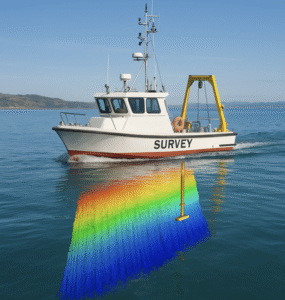
Starting a Hydrographic Survey DimCon business is more than just a technical endeavor—it’s an exciting opportunity to help industries that rely on accurate underwater and coastal data to make critical decisions. Whether it’s offshore construction, harbor maintenance, environmental conservation, oil and gas operations, or maritime navigation, hydrographic surveys form the foundation of safe and successful operations. Dimensional Control (DimCon) within this sector is particularly valuable, ensuring that precise 3D measurements are integrated into subsea structures, pipelines, and vessel positioning systems.
If you have a background in marine engineering, surveying, or geospatial technologies and want to turn your expertise into a thriving business, now is the perfect time. As industries increasingly demand precision, safety, and compliance with environmental regulations, hydrographic survey DimCon services are seeing a surge in value 📈. This article will guide you through actionable tips to help you start a successful Hydrographic Survey DimCon business.
Understand the Industry Landscape
Before launching your business, you need a thorough understanding of the hydrographic and dimensional control industries. Hydrographic surveying involves measuring and mapping underwater terrain. Dimensional control involves using precise instruments and techniques to ensure structural and positional accuracy. Combined, these services are critical in environments where water depth, seabed features, tides, and exact component placement matter—like offshore rigs or bridge foundations 🌉.
Organizations such as the International Hydrographic Organization (IHO) and the Hydrographic Society are excellent starting points for learning industry standards, technologies, and global initiatives. Reading technical papers from sources like Springer’s Journal of Marine Science and Engineering or NOAA’s Hydrographic Surveys Specifications will also strengthen your knowledge base.
Invest in the Right Education and Certifications
While practical experience is critical, formal training boosts your credibility. You or your key employees should pursue certifications in hydrography, land surveying, and CAD-based dimensional control. Here are a few to consider:
-
Hydrographic Surveyor Category A and B (offered by FIG/IHO/ICA)
-
AutoCAD/3D Laser Scanning Certifications
-
Offshore Survival and HSE Training (required by many offshore clients)
Also, consider business management courses so you’re equipped to run operations, lead a team, and handle finances effectively. Websites like Coursera or LinkedIn Learning offer flexible options 📚.
Choose a Niche to Stand Out
You don’t need to do it all from day one. Instead, find a niche where you can excel and create a reputation. Here are some ideas:
-
Offshore wind farms 🌬️
-
Subsea pipeline DimCon inspections
-
Coastal dredging support
-
Marina and harbor development
-
Bridge and civil infrastructure construction
-
Environmental impact studies
Positioning yourself as an expert in one of these areas will help you attract clients looking for that specific experience.
Create a Business Plan with Real Numbers
Every strong business starts with a rock-solid plan. Your business plan should outline:
-
Your services – Will you offer multibeam sonar surveys? Dimensional verification? 3D as-built modeling?
-
Target clients – Private engineering firms? Governments? Oil and gas companies?
-
Pricing strategy – Will you charge hourly, by project, or via service contracts?
-
Startup costs – Include vessel rentals, survey equipment, software licenses, insurance, marketing, and payroll.
-
Projected income – Research market rates in your area and build realistic forecasts.
Use resources like SBA.gov or BPlans for business plan templates tailored to startups 📝.
Secure Your Legal and Business Framework
To operate legally and professionally, make sure you:
-
Register your business with the appropriate state or country authorities
-
Choose a business structure (LLC, corporation, etc.)
-
Obtain necessary business licenses
-
Carry liability and professional indemnity insurance
-
Draft client contracts that cover scope of work, payment terms, and dispute resolution
Consulting a maritime or construction attorney is recommended, especially if you plan to operate in high-liability environments like offshore platforms ⚖️.
Invest in Equipment and Software
Hydrographic surveying and DimCon are hardware- and software-intensive. Expect to budget for:
-
Survey equipment: Multibeam and single-beam echosounders, side-scan sonar, RTK GPS/GNSS, motion sensors, tide gauges
-
Dimensional control tools: Total stations, 3D laser scanners, coordinate measuring arms
-
Software: Hypack, QPS QINSy, AutoCAD, MicroStation, Cyclone 3D, and project management software
Some vendors offer equipment rentals or lease-to-own options, helping reduce initial overhead costs. Stay up to date with manufacturers like Trimble, Leica Geosystems, and Teledyne Marine 💻.
Build Strategic Industry Relationships
Relationships will be your secret weapon. Start building connections early with:
-
General contractors and civil engineers – They’re often the decision-makers for hiring survey companies.
-
Marine equipment suppliers – Strong ties can help you access better rates or early tech.
-
Subcontractors – Forge alliances with divers, engineers, or CAD modelers you can call on for support.
-
Government agencies – Many public works projects require bidding or pre-qualification.
Attending conferences like Oceanology International or local Chamber of Commerce networking events will put your name in the right circles 🤝.
Hire the Right Talent
If you’re scaling beyond a one-person operation, hire people who are both technically capable and safety-conscious. Critical roles may include:
-
Hydrographers and DimCon Technicians
-
Vessel Operators or Marine Pilots
-
CAD Drafters and 3D Modelers
-
Project Managers
-
HSE Officers
Ensure your team holds up-to-date offshore survival and safety certifications, especially if working in oil and gas or remote marine locations 🦺.
Implement a Marketing Strategy That Builds Trust
In technical industries, trust and expertise are your marketing currency. Build a presence with:
-
A professionally designed website with service descriptions, case studies, and certifications
-
LinkedIn activity showcasing field photos, survey videos, and before-and-after project images
-
Search engine optimization (SEO) targeting commercial and government clients in your area
-
Email marketing to engineering firms and public agencies
-
Attending bid openings and submitting responses to RFPs
Client testimonials and visuals of your precision work (before/after models, sonar images, etc.) are particularly persuasive 🎯.
Prioritize Safety and Compliance
Hydrographic Survey DimCon work is often done in challenging environments, so safety must be non-negotiable. Regularly review and follow standards from:
-
ISNetworld for contractor qualification and safety compliance
Also, be prepared to conduct environmental impact assessments and ensure proper waste management protocols are followed when operating vessels 🛥️.
Use Project Management Systems from the Start
As you grow, project complexity will increase. Start with systems that can handle:
-
Proposal and bid tracking
-
Fieldwork scheduling
-
Quality control
-
Data handoffs to clients
-
Equipment calibration logs
Tools like Procore, Smartsheet, or Trimble ProjectSight can help you streamline operations and deliver on time and on budget ⏱️.
Offer 3D Deliverables That Impress
Clients want more than just raw numbers—they want clarity. Your deliverables should include:
-
3D CAD Models of subsea assets, docks, or dredge profiles
-
Bathymetric charts with color grading for depth
-
Deviation reports showing variances from as-built conditions
-
Tide and current analysis reports
These assets can be provided as downloadable PDFs, CAD files, and even web-based 3D viewers for tech-savvy clients 🌐.
Start Small, But Think Big
You may begin your operations by serving local dock expansions or municipal stormwater outflows, but the future is wide open. With your skills in DimCon and underwater surveying, you could expand into:
-
Offshore energy (wind, oil, hydrogen)
-
International marine construction projects
-
Deepwater port development
-
Coastal erosion mitigation and research
-
Scientific exploration
Stay curious and adaptable, and reinvest profits into better tech, better people, and smarter growth 🚀.
Conclusion
Launching a Hydrographic Survey DimCon business takes serious planning, technical knowledge, and a commitment to precision. But if you take the time to understand your niche, invest in the right tools and people, and market yourself with credibility and clarity, you can build a profitable and meaningful company that supports global infrastructure, maritime safety, and environmental responsibility.
From measuring underwater topography to guiding massive offshore structures into place with sub-millimeter accuracy, your work matters more than ever. 🌍
When you’re ready to take the plunge and make waves in this high-demand industry. With solutions that are trusted by professionals across dimensional control and bulk material handling, they’re ready to help you build the foundation of a business that lasts.
💡 Ready to get started? Precision begins with preparation. Let your first step be the smartest one.
