

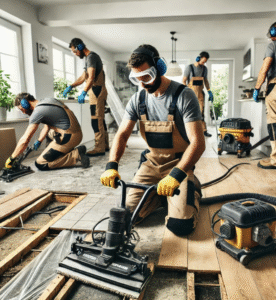
Starting a floor removal business is more than ripping up old tile or pulling up worn carpet—it’s about building a specialized, high-demand service that fills a gap in the remodeling and construction industry. Whether you’re a hands-on professional looking to branch out or an entrepreneur scouting recession-resistant industries, floor removal can be a lucrative niche with relatively low overhead and strong repeat business.
In this comprehensive guide, we’ll walk you through every step to launch a successful floor removal business—from market research to marketing strategies and scaling operations. 💪🏽
Why a Floor Removal Business?
Floor removal is a necessary part of renovations in both residential and commercial settings. Unlike full remodeling services, it requires specific tools, training, and safety protocols, but doesn’t demand a general contractor license in most states. Plus, homeowners, real estate investors, landlords, and even restoration companies are often looking to outsource this physically demanding task.
According to Statista, the U.S. private residential remodeling market was valued at over $500 billion in recent years, and projects involving flooring consistently rank in the top five remodeling services. With new floors often requiring removal of the old, this niche has strong built-in demand.
Step 1: Research the Market 🧠
Before diving in, do local market research:
-
Identify your competitors: Are there other floor removal businesses operating in your area? Check online directories like HomeAdvisor or Angi to see what services they offer and their pricing.
-
Define your target clients: Are you serving homeowners doing DIY renovations? Property managers flipping multiple units? General contractors needing demolition partners?
-
Understand your region’s flooring trends: In coastal areas, tile is popular, while colder regions often use carpet or hardwood. Your services must match the local demand.
Understanding your ideal client and their needs allows you to position yourself more clearly in the market.
Step 2: Register Your Business ✅
Choose a legal structure—LLC is often preferred due to its liability protection and tax flexibility. You’ll need:
-
A unique business name
-
A Federal EIN from the IRS
-
A local or state business license
-
Liability insurance and possibly workers’ compensation insurance if you’re hiring staff
Don’t skip this step—it legitimizes your business and protects your personal assets in case of injury or disputes.
Step 3: Invest in the Right Equipment 🧰
Floor removal requires tools that can handle various surfaces:
-
Tile and Thinset Removal: Floor scraper machines, chipping hammers, SDS drills
-
Carpet and Padding: Utility knives, carpet pullers, tack strip removers
-
Hardwood and Laminate: Pry bars, circular saws, and dust extractors
-
Dust Control: Shop vacuums, HEPA filters, plastic sheeting for containment
-
Personal Protective Equipment (PPE): Gloves, safety goggles, respirators, ear protection, and steel-toe boots
Start with quality used equipment if your budget is tight, and reinvest profits to upgrade over time.
Step 4: Set Your Pricing Structure 💵
Your pricing can be per square foot or per job, depending on the complexity. Consider:
-
Floor type: Tile and hardwood are tougher and more time-consuming than carpet.
-
Obstacles: Furniture, stairs, or asbestos can add time and liability.
-
Labor costs: Factor in your time and employee wages if applicable.
Check competitor rates to stay competitive. Many companies charge between $1.00–$4.00 per square foot for standard removals. Be sure to explain your pricing transparently in estimates.
Step 5: Learn Disposal and Environmental Compliance ♻️
You can’t just toss debris in a dumpster—many cities and counties have regulations. You’ll need to:
-
Arrange for a waste disposal partnership with a local dump or transfer station
-
Rent or buy a dump trailer
-
Separate materials if required by recycling laws
-
Possibly register with your local Environmental Protection Agency office
You can learn more about construction and demolition debris standards from the EPA’s official page.
Step 6: Build an Online Presence 🌐
Having a strong online presence is non-negotiable in 2025. Start with:
-
A professional website with SEO-friendly pages (use a keyword like “Floor Removal [City Name]”)
-
Before-and-after photo galleries
-
Online reviews on Google My Business and Yelp
-
Social media presence on Instagram, Facebook, and even TikTok for job site videos
Make sure your contact info is always visible, and respond to inquiries quickly. A solid reputation can lead to recurring jobs with local contractors and property managers.
Step 7: Develop Strategic Partnerships 🤝
Floor removal doesn’t happen in a vacuum—it’s part of a bigger project. Network with:
-
Flooring installers
-
General contractors
-
Interior designers
-
Real estate agents
-
Insurance adjusters (especially helpful in water damage claims)
Offer referral incentives and explore partnerships where you handle the removal, and they handle the install. It’s a win-win that expands your reach.
Step 8: Train for Safety and Efficiency 🦺
Removing floors is physically demanding and potentially hazardous. Consider certifications from the Occupational Safety and Health Administration (OSHA) to ensure you and your crew understand:
-
Safe equipment operation
-
Fall prevention
-
Dust inhalation risks
-
Noise exposure mitigation
-
Handling hazardous materials like asbestos or mold
Efficiency also matters. Time is money. The faster and cleaner you can work, the more jobs you can take on and the more referrals you’ll receive.
Step 9: Offer Specialized Services for More Revenue 💼
Don’t just stop at basic flooring—expand your offerings:
-
Glue-down carpet or adhesive removal
-
Subfloor grinding and prep
-
Water-damaged floor removal and dry-out
-
Asbestos floor tile abatement (with certification)
-
Commercial floor removal for schools, retail stores, and restaurants
These services typically bring higher profits and fewer competitors in your market.
Step 10: Scale Up Strategically 📈
Once your calendar is full and you’ve built solid systems, start scaling by:
-
Hiring and training employees
-
Buying additional equipment and trailers
-
Opening a second location
-
Partnering with local flooring suppliers to get leads
-
Creating maintenance contracts with commercial buildings
Also, consider investing in digital marketing and local SEO to dominate your geographic area. Working with a marketing consultant or agency can provide a major boost in visibility and lead quality.
Common Challenges to Prepare For ⚠️
Every business has obstacles. Here are some common ones in the floor removal niche:
-
Unpredictable jobsite conditions (e.g., hidden water damage, cracked slabs)
-
Labor shortages in a physically demanding field
-
Equipment maintenance and replacement
-
Customers underestimating time/cost
-
Competing on price instead of value
Stay consistent, communicate clearly, and always focus on the value you bring—not just the price tag.
Conclusion: Ready to Rip Into Success? 🏁
Starting a floor removal business can be your gateway into a booming industry that thrives on grit, reliability, and word-of-mouth referrals. With the right equipment, smart pricing, and strong marketing, you can build a six-figure business serving homeowners, contractors, and property managers alike.
As long as people are upgrading homes and businesses, old floors will always need to come out. That’s where you come in—not just as another contractor, but as a trusted pro who shows up, does the job right, and leaves clients relieved and impressed.
So roll up your sleeves, power up that floor scraper, and start building a business that pulls up the old to make way for the new. 🚀
Want to take the next step? Check out these helpful tools and resources:
Your business starts with one tile. Let it lead to an empire. 💥