

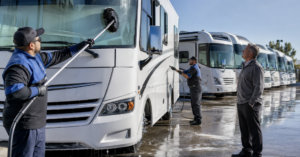
Recreational vehicles have become valuable business assets for rental companies, dealerships, tour operators, mobile service providers, event organizers, hospitality companies, and corporate travel programs. These vehicles may serve different purposes, but they share one important characteristic: their appearance directly affects how customers perceive the business behind them.
An RV traveling down the highway acts like a moving billboard. A clean, polished vehicle communicates professionalism, reliability, and attention to detail. A neglected exterior covered with road grime, oxidation, stains, or black streaks sends a very different message. As businesses place greater emphasis on customer experience and brand reputation, professional RV washing has moved from a basic maintenance task to an important business investment. 🚐
This shift is especially relevant as the recreational vehicle industry continues to evolve. Reuters has reported on changes within the RV market, including demand for premium vehicles and the efforts of manufacturers to reach new customers. When RVs represent substantial financial investments, maintaining their condition becomes a practical way to protect company assets and present a stronger brand.
Clean RVs Strengthen a Company’s Professional Image
Customers often form opinions about a company before speaking with an employee or purchasing a service. Vehicles, storefronts, websites, uniforms, and equipment all contribute to that first impression. For an RV-based business, the condition of the vehicle can become one of the most visible expressions of the brand.
A professionally washed RV looks organized, cared for, and ready for use. This matters for rental companies handing vehicles over to vacationing families, dealerships displaying inventory, and mobile businesses meeting customers at their homes or workplaces. Cleanliness provides visible evidence that the company has standards and follows them consistently.
Business reputation has become increasingly important in a marketplace shaped by online reviews, customer photographs, and social media posts. The business reporting available through CNBC regularly demonstrates how consumer behavior and changing expectations influence companies of every size. A customer can photograph a dirty rental vehicle and share the image online within seconds. The same customer may also post an attractive photograph of a spotless RV and create valuable exposure for the company.
Professional washing helps businesses control the image they present. It ensures that vehicles carrying company logos, phone numbers, websites, and branded graphics make a favorable impression wherever they travel.
Exterior Maintenance Helps Protect Valuable Fleet Assets
An RV is more than transportation. It may also be inventory, a rental unit, a mobile office, a hospitality space, or a revenue-producing asset. Its exterior is continually exposed to ultraviolet rays, insects, road salt, mud, bird droppings, tree sap, mineral deposits, fuel residue, and changing weather conditions.
When these substances remain on the surface, they can contribute to staining, fading, oxidation, and deterioration. Road salt and moisture may also affect exposed metal components and encourage corrosion. Regular professional washing removes damaging contaminants before they become more difficult or expensive to address.
The general importance of maintaining business assets is reflected in resources offered by the U.S. Small Business Administration, which helps business owners plan for sustainable growth and responsible operations. Protecting equipment and vehicles is part of that responsibility. A business that maintains its fleet consistently may reduce avoidable repair expenses and preserve the usefulness of its assets for a longer period.
Professional cleaning can also reveal developing problems. Once dirt and buildup have been removed, employees may be more likely to notice cracked sealant, loose trim, damaged decals, rust spots, surface scratches, or areas of oxidation. Discovering these concerns early allows the company to schedule corrective maintenance before a relatively small issue becomes a larger expense.
Professional Washing Supports Higher Resale and Trade-In Value
Many businesses replace RVs according to a planned fleet cycle. Rental operators may sell vehicles after several seasons, while dealerships and corporate programs may trade older models for newer ones. Exterior condition can have a significant influence on how prospective buyers evaluate those vehicles.
A well-maintained RV suggests that the company also cared for the engine, interior, roof, plumbing, and other systems. Although a clean exterior cannot replace maintenance records or a mechanical inspection, it creates a stronger initial impression and may help a vehicle compete more effectively in the resale market.
The broad economic coverage provided by The Associated Press business section illustrates how pricing, consumer confidence, financing, and market conditions affect purchasing decisions. Businesses cannot control every economic factor influencing resale demand, but they can control the condition in which they present their assets.
Consistent professional washing helps prevent years of neglect from becoming visible at the moment of sale. It also supports better listing photographs, more attractive dealership displays, and greater buyer confidence. These advantages may help a company sell an RV faster or negotiate from a stronger position.
Reliable Cleaning Creates a More Consistent Customer Experience
Consistency matters whenever customers rent, purchase, tour, or receive services from an RV-based business. Every vehicle should reflect the same level of care, regardless of which employee prepared it or which location manages it.
Professional RV washing creates a repeatable process. Trained technicians use appropriate products, equipment, and methods for large vehicle surfaces. They understand that RV exteriors may include fiberglass, gel coat, painted metal, vinyl graphics, rubber seals, windows, awnings, and other materials that require careful treatment.
Businesses searching for dependable service options often begin by looking for RV Washes Near Me to identify providers familiar with the size, construction, and cleaning requirements of recreational vehicles. Choosing a professional service can help a business establish a predictable schedule instead of relying on rushed, inconsistent cleaning between rentals or customer appointments.
A consistent appearance is particularly important for companies operating multiple vehicles. Customers should receive the same visual standard across the entire fleet. That uniformity strengthens trust and makes the organization appear more established.
Outsourcing RV Washing Can Improve Operational Efficiency
Washing a large RV requires considerable time, suitable equipment, water access, cleaning supplies, ladders or extension tools, and adequate space. Assigning the task to employees may seem economical, but the full cost includes wages, supervision, supplies, equipment maintenance, and time diverted from revenue-producing responsibilities.
An employee who spends several hours washing an RV cannot simultaneously assist customers, prepare rental documents, inspect mechanical systems, complete sales work, or handle reservations. For businesses with several vehicles, the lost productivity can accumulate quickly.
Professional washing allows employees to concentrate on the work they were hired to perform. It also gives managers a clearer cleaning expense that can be incorporated into fleet budgets. Instead of managing numerous small purchases and unpredictable labor demands, the company can schedule service according to mileage, season, usage, or rental turnover.
The U.S. Department of Energy’s fleet resources emphasize structured fleet planning and the importance of matching vehicle decisions to operational needs. Although those resources address federal fleets, the underlying business principle applies broadly. Fleet expenses are easier to control when maintenance activities are planned, measured, and assigned deliberately.
Responsible Wash Practices Can Reduce Environmental Risk
Vehicle washing involves more than applying soap and rinsing it away. Wash water can collect oil, grease, road salt, sediment, metals, cleaning chemicals, and other pollutants from an RV’s exterior and undercarriage. If that water enters a storm drain, it may flow into local streams, rivers, or lakes without receiving appropriate treatment.
The U.S. Environmental Protection Agency identifies vehicle and equipment washing as an activity requiring proper stormwater management practices. Businesses should understand applicable municipal rules, wastewater requirements, and environmental responsibilities before establishing an on-site washing operation.
A reputable professional provider may use designated wash areas, wastewater collection methods, water-efficient equipment, or approved disposal procedures. Businesses should confirm the provider’s practices because requirements can vary by location.
Environmental responsibility also affects brand reputation. Customers increasingly notice how companies use water, manage chemicals, and reduce waste. Selecting a service provider that follows responsible practices allows a business to maintain its fleet without ignoring the surrounding community.
Specialized Methods Help Prevent Accidental Exterior Damage
RV exteriors differ from ordinary passenger vehicles in both size and construction. A cleaning method that works well on an automobile may be inappropriate for an RV’s roof material, aging decals, sealants, awnings, vents, or gel-coated panels.
Excessive pressure can force water into seams, damage graphics, or disturb sealant. Harsh chemicals can leave streaks, discolor surfaces, or accelerate fading. Abrasive brushes may create visible scratches. Improperly positioned ladders can damage sidewalls or create a safety hazard for workers.
Professional RV washers should understand these risks and select cleaning methods based on the vehicle’s condition and materials. They can give particular attention to common problem areas such as bug-covered front caps, stained roof edges, wheels, lower panels, mirrors, windows, and areas beneath awnings.
The Wikipedia overview of recreational vehicles reflects the wide variety of RV styles and configurations in use. Motorhomes, travel trailers, camper vans, fifth-wheel trailers, and specialty vehicles do not all present the same cleaning challenges. A provider experienced with multiple RV types can adjust the process accordingly.
Scheduled Washing Helps Businesses Control Long-Term Costs
Reactive maintenance usually begins after a problem has become visible. Scheduled maintenance addresses predictable needs before they become urgent. RV washing fits naturally into a preventive fleet-maintenance program.
A rental company may schedule cleaning after each return, with more detailed exterior service at established intervals. A seasonal tour operator may arrange washes before opening, throughout the active season, and before winter storage. A dealership may clean high-traffic display units more frequently than vehicles kept in protected inventory.
Scheduling provides several financial advantages. It reduces emergency cleaning before customer pickups, helps managers forecast expenses, and prevents excessive buildup from requiring more intensive correction later. It can also ensure that the vehicles are ready for marketing photographs, trade shows, promotional events, or sales appointments.
Business leaders following developments through publications such as Forbes understand that efficiency is often created through dependable systems rather than isolated cost-cutting decisions. A planned wash schedule is a relatively simple system that supports asset protection, customer satisfaction, employee productivity, and brand consistency at the same time.
A Clean Fleet Becomes Part of the Company’s Marketing
Every branded RV has the potential to attract attention on highways, at campgrounds, in parking areas, and during public events. Clean paint, polished surfaces, clear windows, and readable graphics make that exposure more valuable.
A neglected vehicle weakens even the best wrap or logo design. Dirt and oxidation reduce contrast, obscure contact information, and make the business appear less active. Professional washing restores the visibility of branded graphics and helps the vehicle perform its marketing role more effectively.
Clean RVs also produce better digital content. Companies can use them in website photographs, social media posts, advertisements, brochures, and rental listings. One properly maintained vehicle may appear in marketing materials for years, extending the value of both the cleaning service and the original branding investment.
Conclusion
Professional RV washing has become an important part of fleet management for businesses that depend on recreational vehicles. It supports a stronger brand image, protects expensive assets, improves operational efficiency, and helps create a consistent customer experience.
Regular cleaning can also reveal early maintenance concerns, support resale value, improve marketing photographs, and reduce the risk of damage caused by unsuitable products or techniques. When responsible wastewater practices are included, professional washing can help a business meet its environmental obligations as well.
A company’s vehicles communicate wherever they travel. Keeping those RVs clean ensures that the message reflects professionalism, care, reliability, and pride in the business. For organizations that rely on their fleet to serve customers and generate revenue, professional RV washing is more than cosmetic upkeep. It is a practical investment in the company’s assets, reputation, and long-term success.